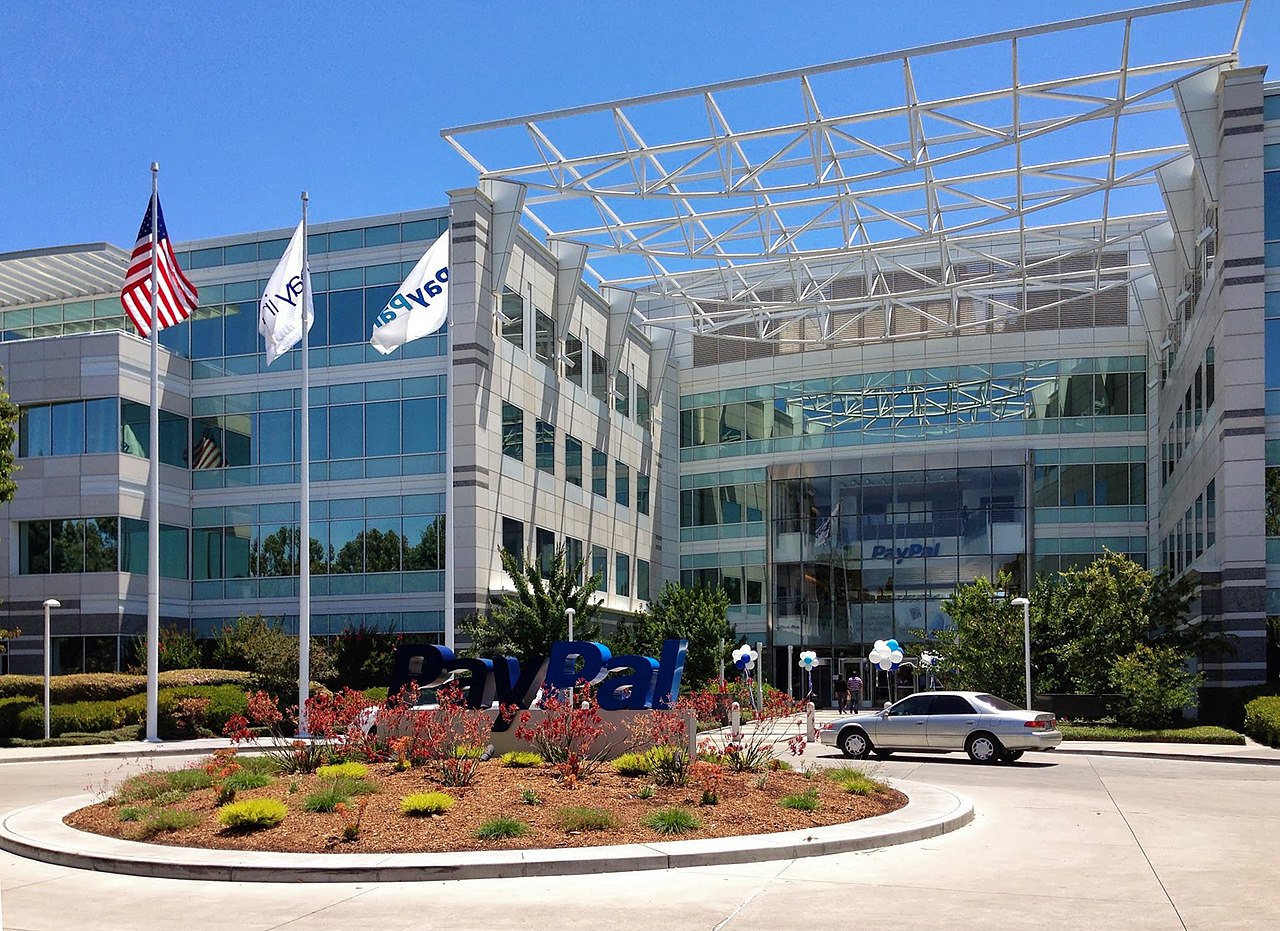
The Recent Dip: Unpacking PayPal's 17% Year-to-Date Slide
PayPal (PYPL) has long been a staple in the digital payments landscape, but recent market dynamics have cast a shadow over its once-unblemished growth story. Year-to-date, PayPal shares have experienced a significant dip of approximately 17%, prompting investors to question whether this downturn presents a buying opportunity or a signal of deeper challenges. This slide isn't an isolated event; the stock has actually declined by over 24% since reaching a 52-week high of $93.66 in December 2024, indicating a sustained downward trend.
Several factors contribute to this bearish sentiment. Foremost among them is the intensifying competition within the burgeoning fintech industry. Giants like Apple Pay, along with a host of other innovative payment solutions, are aggressively vying for market share, eroding PayPal's dominance in certain segments. This heightened competition often translates into increased marketing spend, pressure on transaction fees, and a fight for consumer and merchant loyalty.
Beyond competitive pressures, a challenging macroeconomic environment has served as an additional overhang. Economic uncertainties, including the looming risk of a recession, influence consumer spending habits and business investment. When consumers tighten their belts, transaction volumes for payment processors like PayPal can suffer. Furthermore, global trade tensions and inflationary pressures can impact disposable income and, consequently, the overall digital payments ecosystem. These macro headwinds, combined with fierce competition, have created a perfect storm, pushing PayPal's stock price lower and leading many to ponder:
is PayPal stock a buy at these levels?
A Closer Look at PayPal's Valuation and Market Position
Despite the recent price depreciation and bearish technical indicators, an objective analysis of PayPal's valuation metrics reveals an intriguing picture. According to some assessments, PYPL stock appears "cheap," notably suggested by a "Value Score of B." This valuation advantage is primarily evident when examining its forward 12-month P/E (Price-to-Earnings) ratio. PayPal is currently trading at a forward P/E of 13.7X, which stands in stark contrast to the Zacks Financial Transaction Services industry's average of 23.56X. This significant discount suggests that, based on future earnings expectations, PayPal is trading at a much lower multiple than its industry peers.
However, a lower P/E ratio isn't always a direct signal to buy. It often reflects investor concerns about future growth prospects or potential risks. Indeed, PayPal's trailing 12-month performance has lagged behind its industry, with its shares appreciating by only 6.5% compared to the industry's robust 17.7% gain. This underperformance suggests that while the stock might be inexpensive on paper, it hasn't delivered the same returns as its competitors or the broader sector.
From a technical perspective, the signals are equally cautionary. PayPal shares are currently trading below both their 50-day and 200-day moving averages. This technical pattern is widely interpreted as a bearish indicator, signifying that the stock's recent price action and momentum are trending downwards, and that a recovery may not be imminent. For investors pondering, "
is PayPal stock a buy," these technical signals underscore the importance of a thorough fundamental analysis rather than solely relying on price dips.
PayPal's Core Strengths and Growth Catalysts
Amidst the market turbulence and competitive landscape, PayPal continues to leverage its robust portfolio and innovative solutions to maintain deep relationships with both merchants and consumers. The company's unique "two-sided platform" is a significant competitive advantage, enabling it to cultivate direct financial connections across its vast ecosystem.
PayPal's strategic investments have been instrumental in driving key performance indicators:
*
Expanding Reach: Through enhancements to its branded checkout, person-to-person (P2P) services, and the popular Venmo platform, total active accounts increased by 2% year over year in 2024, reaching an impressive 434 million.
*
Transaction Growth: The total number of payment transactions saw a healthy 5% year-over-year increase, totaling 26.33 million.
*
Volume Surge: Benefiting from an expanding clientele, total payment volume (TPV) grew by 10% year over year, reaching a staggering $1.68 trillion in 2024.
*
Margin Expansion: Transaction margin in dollar terms also grew by 7% year over year, indicating efficient processing and revenue generation.
*
BNPL Success: The Buy-Now-Pay-Later (BNPL) segment, a growing area in consumer finance, saw its TPV surge by 21% year over year to $33 billion.
One of PayPal's most noteworthy recent additions is
Fastlane, a cutting-edge guest checkout experience designed for simplicity and speed. Fastlane allows users to complete purchases in a single click, significantly improving conversion rates for merchants. Its strategic importance is underlined by partnerships with major brands like NBCUniversal, Roku, and StockX, which are expected to boost future volumes. Interestingly, Fastlane is also proving to be a powerful user acquisition tool, with roughly 75% of Fastlane consumers being new or dormant PayPal users, and 25% never having had a PayPal account before. Partnerships with industry leaders such as Adyen, Global Payments, and Pfizer are further expected to attract more merchants to this high-conversion solution.
Beyond payments, PayPal is actively expanding its value-added services to enhance the merchant experience. In the fourth quarter of 2024, the company launched FX-as-a-service, an automated currency conversion platform already live on Meta Platforms. Additionally, its network tokens for automated billing capabilities are gaining traction with merchants. Looking ahead, PayPal projects transaction margin in dollar terms (excluding interest on customer balances) to grow at least 5% in 2025, reaching high-single-digit growth by 2027, with a long-term goal of over 10%. These initiatives underscore PayPal's commitment to innovation and diversification, essential factors when considering if
is PayPal stock a buy for long-term growth.
Navigating Headwinds: Competition, Slow Growth, and Takeover Speculation
While PayPal boasts a strong portfolio and strategic initiatives, it is undeniable that the company faces significant headwinds that have dampened investor enthusiasm and contributed to its stock's underperformance. The primary challenge remains the intensely competitive landscape. Beyond traditional payment processors, tech giants like Apple with Apple Pay and Google Pay, along with innovative startups, are constantly introducing new features and services, pressuring PayPal's market share and profitability. This competition, combined with a general slowdown in customer spending—especially discretionary spending—has led to concerns about decelerating growth rates.
Investors have also been grappling with changes in leadership and, at times, a perceived weak future profit outlook. While new leadership can bring fresh perspectives and strategies, it can also introduce uncertainty during transition periods. Concerns about profit margins are often linked to the increased cost of fighting off competitors, potentially requiring higher marketing spend or reduced transaction fees to retain users and merchants.
However, a surprising twist in PayPal's narrative recently emerged in the form of takeover speculation. The stock experienced a notable jump of 6-7% following reports that several potential buyers were showing interest in acquiring the company. This interest reportedly arose after the stock's significant decline in recent years, suggesting that some believe PayPal is currently undervalued. Reports indicate that banks have held meetings with PayPal due to unsolicited buyer interest, with at least one major rival company rumored to be among the interested parties.
This speculation, while not confirmed, introduces an interesting dynamic. On one hand, it could place a floor under the stock price, as the potential for a buyout might limit further downside. On the other hand, it's speculation, and investors should exercise caution. Nonetheless, such news can often inject a temporary boost of optimism into a struggling stock. For a deeper dive into what this potential takeover interest could mean for PYPL, read our related article:
PayPal Stock Jumps 6%: What Takeover Interest Means for PYPL.
Is PayPal Stock a Buy? Weighing the Opportunity Against the Risks
The question, "
is PayPal stock a buy," is complex, with compelling arguments on both sides. For value investors, the current valuation, characterized by a significant discount compared to its industry P/E, presents an attractive entry point. The company’s strong financial base, vast active user base, and consistent growth in TPV and transaction margins underscore its fundamental health. Initiatives like Fastlane, FX-as-a-service, and network tokens demonstrate PayPal's commitment to innovation and diversifying its revenue streams, which could be powerful growth catalysts in the long term. The recent surge in takeover speculation also hints at an underlying value that the market might be overlooking.
However, risks cannot be ignored. The relentless competition from tech giants and agile fintech startups poses a continuous threat to PayPal's market share and pricing power. Slowing growth rates in some segments and the broader macroeconomic headwinds could continue to pressure earnings. The bearish technical indicators, with the stock trading below key moving averages, suggest that the downward momentum may persist in the short term.
Practical Tips for Investors Considering PYPL:
- Assess Your Risk Tolerance: PayPal is a mature company in a highly competitive and evolving industry. While it offers potential value, it also carries the risk of slower growth compared to earlier days.
- Monitor Growth Metrics: Keep a close eye on active account growth, TPV, and transaction margin percentages. Sustained growth in these areas will be key to a turnaround.
- Watch Competitive Responses: Evaluate how PayPal continues to innovate and differentiate itself from competitors like Apple Pay. New features and merchant partnerships are crucial.
- Evaluate Macroeconomic Trends: Consumer spending and economic stability directly impact payment volumes. A worsening economic outlook could further depress the stock.
- Diversify Your Portfolio: Even if you see potential in PayPal, ensure it's part of a well-diversified investment strategy to mitigate individual stock risk.
For investors with a long-term horizon and an appetite for a turnaround story, PayPal's current valuation and strategic initiatives might outweigh the immediate headwinds. However, those seeking high-growth momentum or minimal risk might find the current environment challenging. Understanding the interplay between its discounted price and the potential impact of strategic initiatives like Fastlane is crucial. For a more detailed look into these specific aspects, refer to our article:
PYPL Stock: Is Its Discounted Price & Fastlane a Buy Signal?
Conclusion
PayPal finds itself at a pivotal juncture. Its 17% year-to-date dip and significant discount relative to industry peers present a potential value opportunity for discerning investors. The company's robust portfolio, expansive user base, and strategic investments in areas like Fastlane and value-added services provide a solid foundation for future growth. However, the shadow of intensifying competition, macroeconomic uncertainties, and slower growth rates cannot be overlooked. While recent takeover interest adds an intriguing layer of potential upside, it remains speculative. Ultimately, whether
is PayPal stock a buy after its recent dip hinges on an investor's individual risk tolerance, investment horizon, and belief in the company's ability to navigate its current challenges and capitalize on its strategic advantages in the evolving digital payments landscape. Thorough due diligence and a balanced perspective are essential before making any investment decision.